Ristoh AI uses web search during customer onboarding. For our MVP, we chose Tavily because its credential model better fits the way we need this workflow to scale.
The Exa API-key constraint
The Exa dashboard stated that a team could create up to 100 API keys. A key for every customer would introduce a ceiling and require a Kubernetes secret for each one.
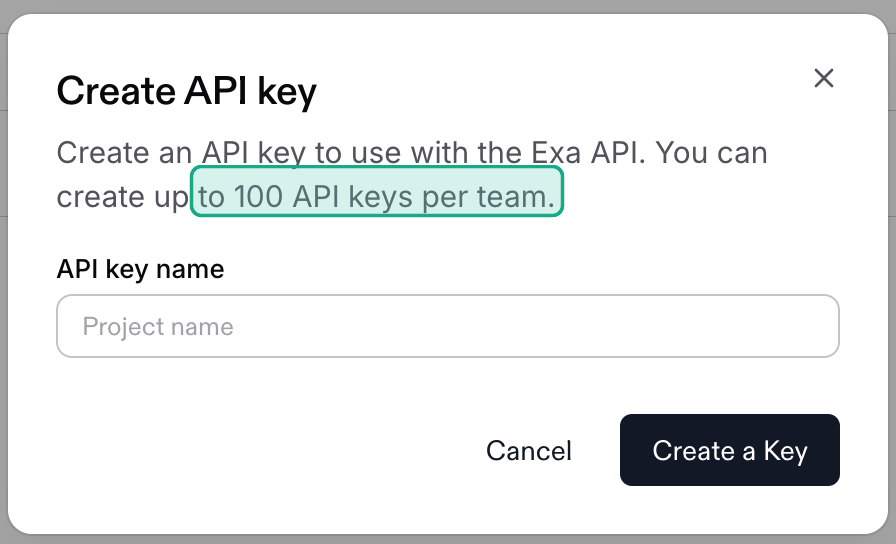
Exa dashboard captured on 27 August 2026. Account limits and interfaces may change.
Exa’s Create API Key documentation says new team keys can be generated programmatically using a service API key.
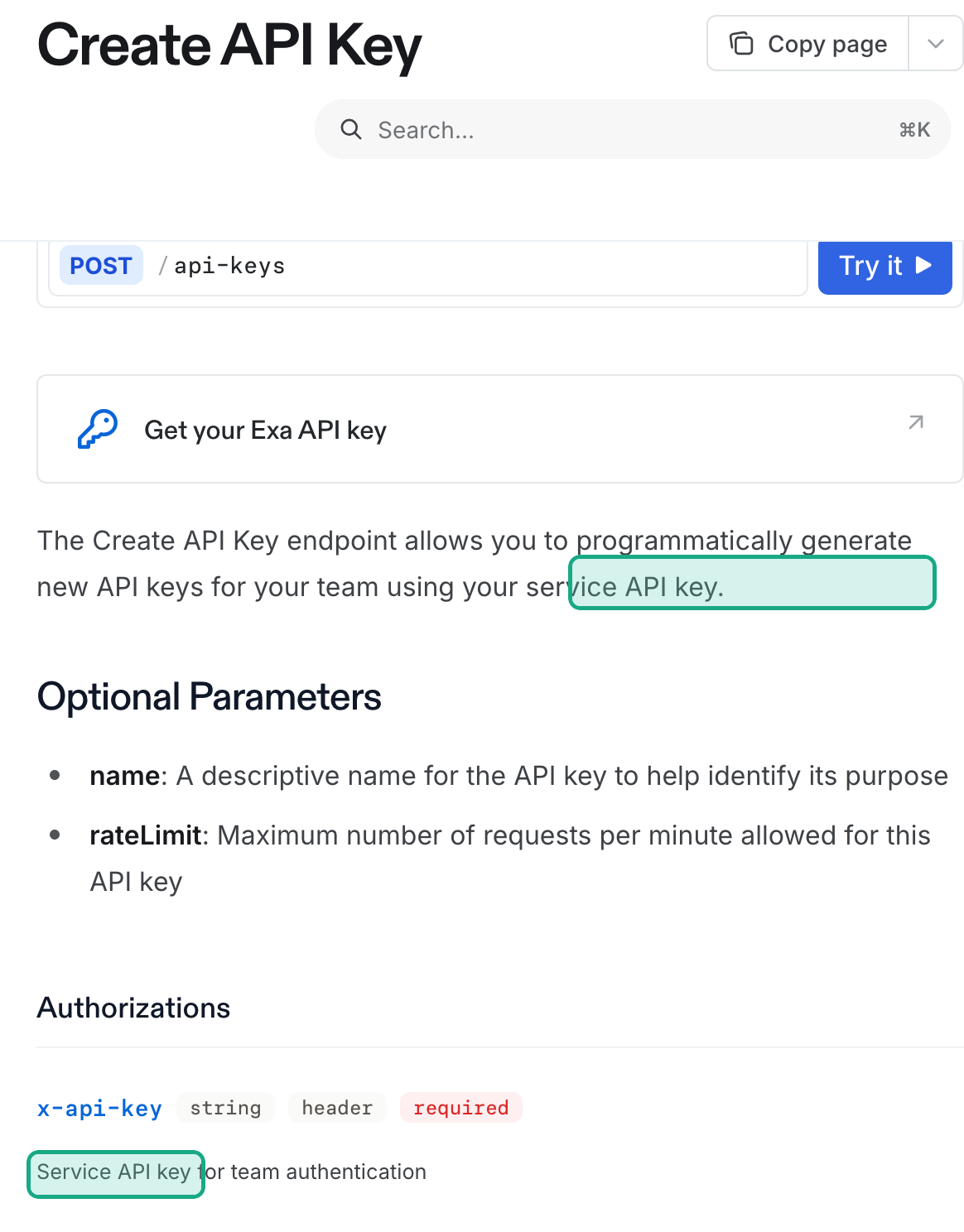
Exa Create API Key documentation captured on 27 August 2026. Documentation and interfaces may change.
The dashboard did not show us a clearly labelled service API key or an obvious way to obtain one. The mechanism may exist, but its automation path was unclear.
Why Tavily may fit better
Tavily’s documentation allows one API key to be paired with optional project IDs and usage filtered by project. This could preserve centralised authentication without a separate search key and Kubernetes secret for every customer. The shared credential would still require strong protection; project IDs organise usage but are not a security boundary.
An indexing observation
Before ristoh.co.ke appeared in Google’s index, neither playground returned it. Roughly a day after submission through Google Search Console, Tavily began returning the site, while Exa still returned no result. This timing does not prove that Tavily relies on Google, nor does it explain why Exa did not find the site; it records only what we observed in those tests.
For the MVP, the migration decision is made: Tavily will provide the search integration. We will continue monitoring search quality, cost, and operational controls as the product develops.